Tesla Bots Learn at New Academy
Tesla is using thousands of robots in a dedicated training facility to generate the data needed to make Optimus commercially viable.
By Jacob Leary ·
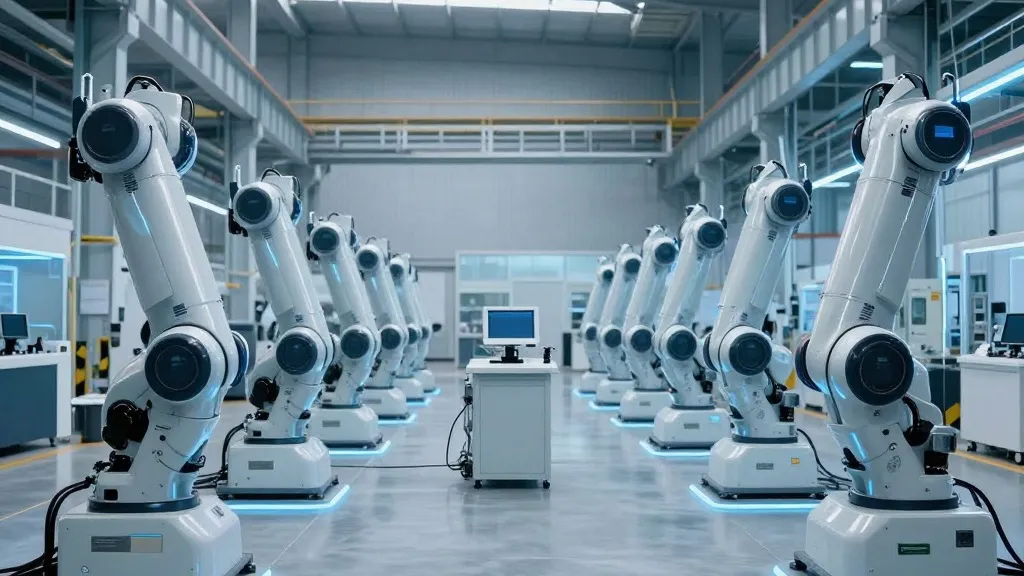
Tesla has officially shifted the focus of its Fremont facility from building cars to producing humanoid robots. The company confirmed that the Optimus units rolling off the high-volume production line are the first to meet the standards required for a commercial product. In its third-quarter shareholder letter, the automaker stated that it has proven the current manufacturing process is suitable for a product intended for general sale, marking a significant milestone in the transition from prototype to mass production.
The physical infrastructure for this shift is already in place. The production line occupies the space previously used for the Model S and Model X, which Tesla cleared out in just 46 days earlier this spring. This rapid conversion was necessary to accommodate a manufacturing setup designed for a theoretical capacity of one million robots per year. During the earnings call held this week, Elon Musk noted that the majority of the equipment required to reach that high capacity is already located inside the Fremont plant. As the line continues to ramp up, output is expected to climb toward approximately 20,000 robots every week.
Musk characterized the growth trajectory of the Optimus program as a classic S-curve, though he warned that the initial phase involves a shallow slope. The engineering team is currently focused on refining several critical areas, including the robot's artificial intelligence, electromechanical design, overall reliability, and service life. Tesla aims to have this refinement work completed by the end of next year. Once that deadline is met, the company plans to begin delivering units to external businesses, targeting roles that are dangerous, repetitive, or require around-the-clock operation.
A central challenge in developing the robot is how to teach it effectively. While Tesla’s vehicles benefit from a vast fleet of millions of cars sending real-world driving data back to the AI team, Optimus does not have such a large existing user base. Musk acknowledged this disparity, noting that the lack of a massive fleet limits the immediate availability of training data. To solve this, Tesla is establishing an internal environment where robots can generate their own learning material without relying on external customers.
The solution is the Optimus Academy, a dedicated training ground where 10,000 to 20,000 robots will practice a wide variety of tasks. This setup allows every unit produced on the Fremont line to serve as a source of training data. As these robots perform exercises, they feed what they learn back into the system, improving the next version of the AI model. This iterative process is designed to accelerate the robot's capability to handle complex, real-world scenarios that preprogrammed motions cannot address.
Hardware upgrades are also on the horizon to support this learning process. Tesla plans to integrate its AI5 chip into the Optimus units next year, which should enhance the robot's processing power and autonomy. Musk indicated that a new video demonstration will be released within the next one or two months. This footage is expected to show the robot completing tasks driven by AI rather than relying on scripted sequences. He specifically contrasted this approach with rival humanoid demonstrations that often rely on preprogrammed routines, arguing that those scripted performances would not hold up in unstructured real-world environments.
The supply chain is aligning with Tesla’s production goals. In September, the company certified Tuopu, Joyson, and Sanhua as mass production partners for key Optimus components. Additionally, a much larger dedicated facility is under construction at Giga Texas. Recent drone footage captured by Joe Tegtmeyer showed the steel frame of this new plant nearing completion. Musk has set the long-term target for this Giga Texas location at 10 million robots per year, far exceeding the current Fremont capacity.
From a financial perspective, Tesla executives indicated that Optimus production costs are trending toward the expected manufacturing cost of the Cybercab. This suggests the robot is being engineered for volume production from the outset, rather than being a niche, high-cost product. However, challenges remain. The robot's hands are currently considered the toughest part of the design. Musk highlighted this difficulty during the X Takeover event earlier this month, and it remains a primary focus for the current engineering team as they work to finalize the design before wider commercial release.
Source: Teslarati